The Roots of Farmworker Solidarity in Oxnard, CA
In 1903, the American Sugar Beet Company conspired to lower employees wages by pitting Mexican and Japanese workers against each other.
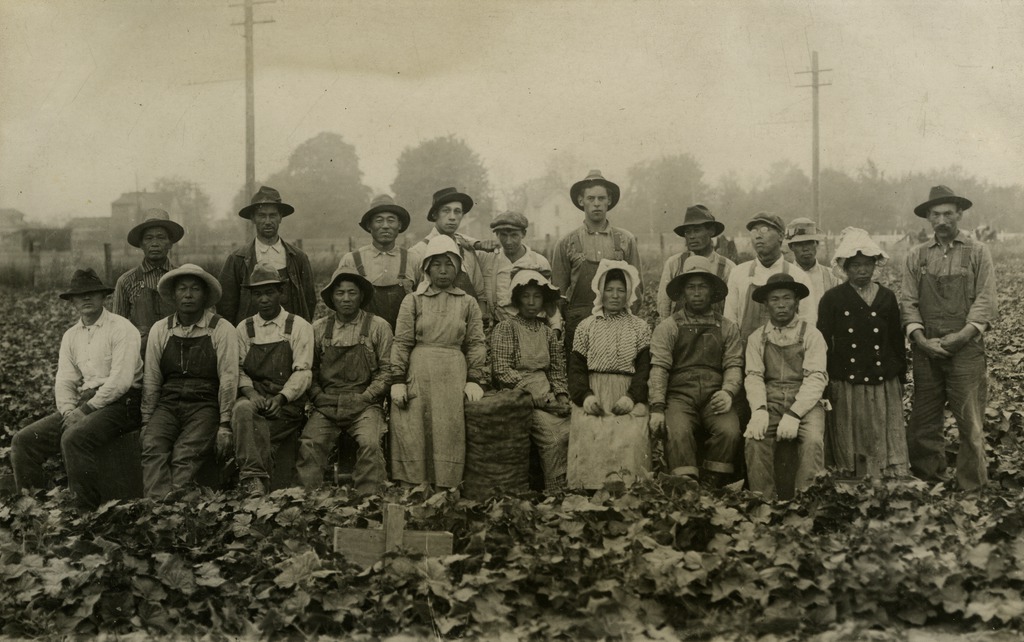
On February 11, 1903, in response, 500 Japanese, 200 Mexican, and some Chinese sugar beet workers in Oxnard, CA went on strike for 48 days!
The formation of the Japanese Mexican Labor Association (JMLA) launched the first multiethnic agricultural strike in California history. The Oxnard Sugar Beet Strike of 1903 was a formidable moment in American labor history. JMLA members fought against sub-living wages and contracting out of their work – while facing violence from their employers, a monopoly of subcontractors and a racist miscarriage of justice.
Who was the American Sugar Beet Company?
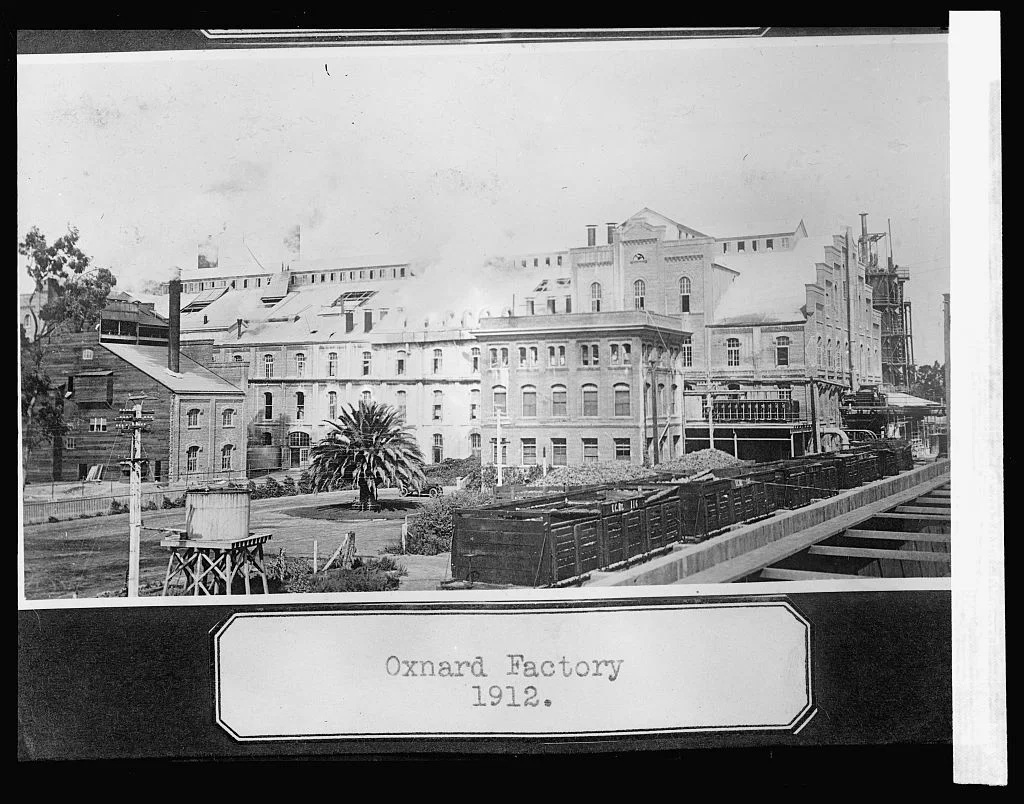
According to Tomas Almaguer’s entry in Daniel Cornfield’s Working People of California, the Oxnard brothers established the American Sugar Beet Company in Ventura County in 1897.
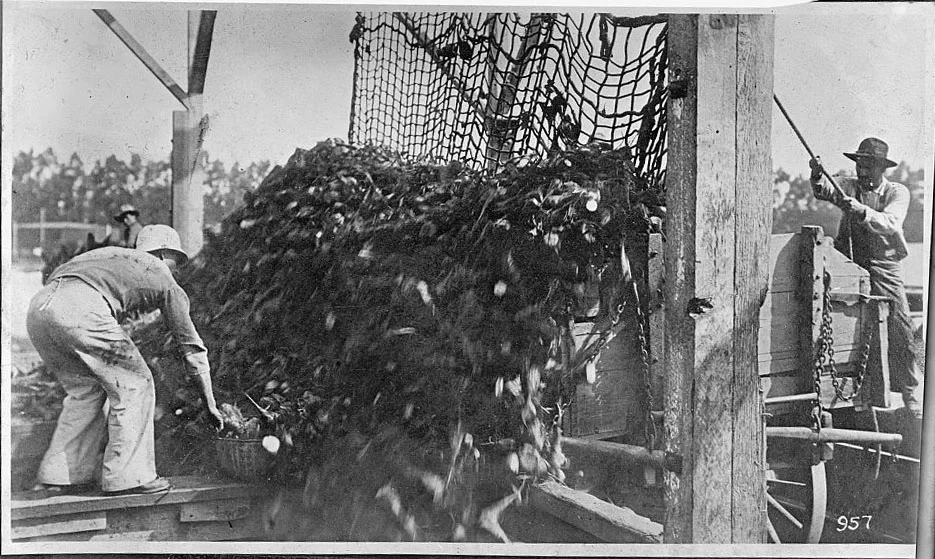
In 1899, they formed the Bank of Oxnard and began loaning funds to growers who were doing business with their American Sugar Beet Company, aiding its rapid expansion and control over the industry. By 1903, in three years' time, the American Sugar Beet Co. was processing more than three times its output from 1900, yielding over 200,000 tons of sugar beets.
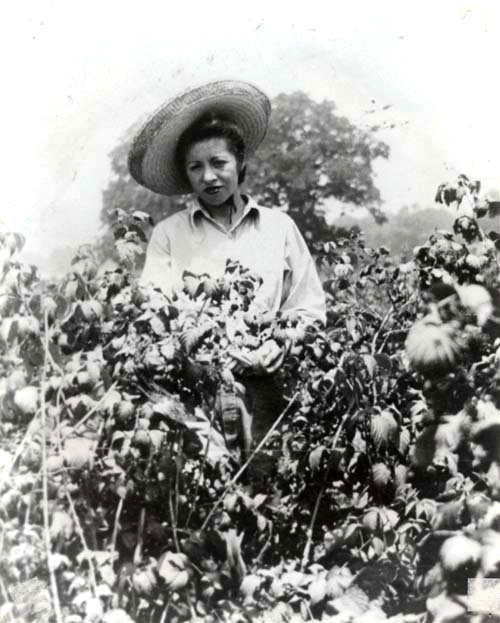
The Oxnard brothers sought to reduce costs of their massive company by lowering wages. In 1902, they formed the Western Agricultural Contracting Company (WACC) and began recruiting farm laborers – most of whom were Japanese immigrants and Mexican laborers. Some of this recruitment was necessitated by the Chinese Exclusion Act, which had banned Chinese laborers from entering the U.S.
Prior to this, Chinese workers were heavily relied on for their labor in California agriculture.
WACC contractors harvested almost 75% of the 1902 sugar beet crop in Oxnard, and in early 1903, this near monopoly of WACC farm labor contractors sought to squeeze out and eliminate remaining small, independent contractors.
With the threat of absolute monopoly nearing and WACC wages dropping due to lack of competition, on Feb 11, 1903, 500 Japanese and 200 Mexican farm laborers created the Japanese Mexican Labor Association (JMLA).
The Strike and the Legacy of Solidarity
From organizing 700 total workers in early February, the JMLA union expanded to 1200 members throughout the duration of the strike, accounting for over 90% of the sugar beet farmworkers in Ventura County, according to Barajas and Almaguer.
The strike grew, as did the power of JMLA. On March 21, WACC attempted to launch a competing company union, the Independent Agricultural Labor Union (IALU), whose stated intent was to preserve more amicable labor relations. However, the IALU wasn’t a union but just another strike-breaking tactic.
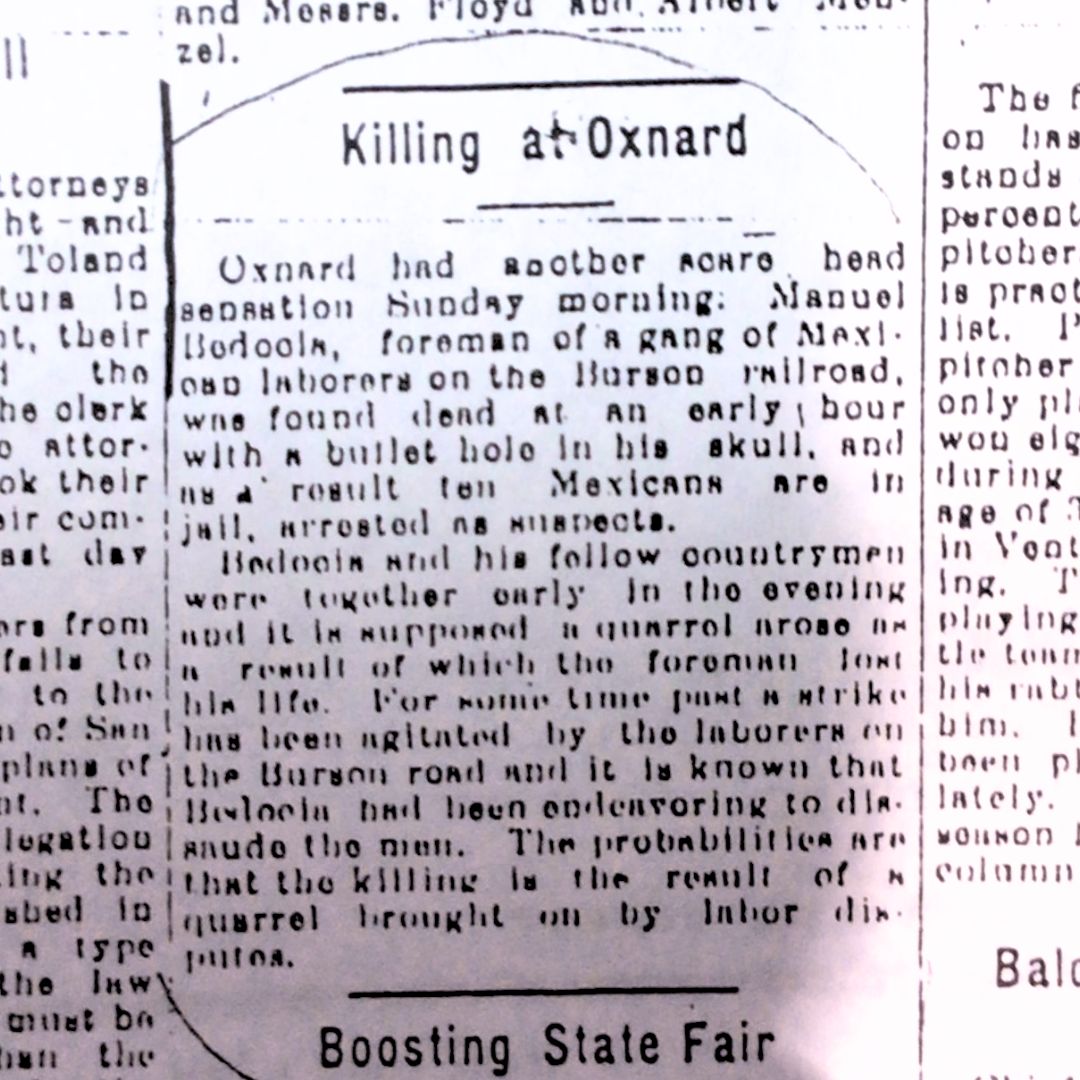
On March 23rd, violence struck. JMLA members attempted to hang a banner with their insignia on a wagon of IALU strike breakers in Oxnard’s Chinatown. As they did, shots rang out. Five JMLA members were shot, one of whom was killed. His name was Luis Vasquez.
JMLA’s struggle didn’t end at the bargaining table. The JMLA succeeded in bargaining with the help of the Los Angeles County Council of Labor (@lalabor). After the strike ended on March 30, 1903, the JMLA formally requested membership in the American Federation of Labor as the Sugar Beet and Farm Laborers' Union of Oxnard. The AFL’s president, Samuel Gompers, granted that request under the condition that the union not accept any Japanese or Chinese members. The JMLA responded to Gompers writing:
"We beg to say in reply that our Japanese brothers here were the first to recognize the importance of cooperating and uniting in demanding a fair wage scale. They were not only just with us, but they were generous when one of our men was murdered by hired assassins of the oppressor of labor… In the past we have counseled, fought and lived on very short rations with our Japanese brothers, and toiled with them in the fields, and they have been uniformly kind and considerate.
We would be false to them and to ourselves and to the cause of unionism if we now accepted privileges for ourselves which are not accorded to them. We are going to stand by men who stood by us in the long, hard fight which ended in a victory over the enemy. We therefore respectfully petition the A.F. of L. to grant us a charter under which we can unite all the sugar beet and field laborers in Oxnard, without regard to their color or race. We will refuse any other kind of charter, except one which will wipe out race prejudices and recognize our fellow workers as being as good as ourselves."
The Japanese Mexican Labor Alliance was a historic labor organization from Oxnard, CA. Their sacrifices as workers fighting for their rights in the face of violence and intense backlash from their employers shall be recognized.
Today, as immigrant workers and their families are being targeted by the federal government, we reflect on the power of solidarity shown by the union members of JMLA in the face of oppression.
Material for Further Reading (JMLA)
Oxnard Sugar Beet Strike of 1903
A Selected Bibliography
by José M. Alamillo
California State University, Channel Islands
Almaguer, Tomás. "Racial Domination and Class Conflict in Capitalist Agriculture: The Oxnard Sugar Beet Workers' Strike of 1903." V. 25, N. 3.Labor.History.(1984).
Almaguer, Tomás. Racial.Fault.Lines¿.The.Historical.Origins.of.White.Supremacy. in California (Berkeley: University of California Press, 1994)
Street, Richard Steven. “The 1903 Oxnard Sugar Beet Strike: A New Ending,” Labor.History 39:2 (1998): 193-199.
Barajas, Frank P. “Resistance, Radicalism, and Repression on the Oxnard Plain: The Social Context of the Betabelero Strike of 1933,” Western.Historical.Quarterly, . 35, n.1 (Spring 2004)
Barajas, Frank. Curious.Unions¿.Mexican.American.Workers.and.Resistance.in.Oxnard?. California?.7❹❺❹‗7❺❷7. Lincoln, NE: University of Nebraska, Press, 2012.
Maulhardt, Jeffrey, Oxnard.Sugar.Beets¿.Ventura.County҂s.Lost.Cash.Crop (The History Press, 2106)
Galck, Susan, “Evolution of Ventura County Agriculture, 1782-2000” (Ventura County Museum of History & Art, December 2005)
Fukuyama Yoshio, “The Japanese in Oxnard California, 1898-1945” In Citizens.Apart¿. A History.of.the.Japanese.in.Ventura.County¡ Ventura County Historical Society Quarterly 39:4/40:1 (1994): 3-31. ,
David Adan Vasquez Valenzuela, De.Betabeles.y.Revoluciones¿.El.Partido.Liberal.Mexicano. y.La.Producción.de.Remolacha.Azucarera.en.el.Sur.de.California.y.El.Sureste.de.Colorado?. 7❹❺6‗7❺8❺( El Colegio de Mexico, 2022)
Wally Smith, “Bullets, Bloodshed Marked 1903 Strike in Oxnard,” Ventura.County.Star.Free. Press, April 30, 1978.
Ichioka, Yuji. The.Issei¿.the.World.of.the.First‗Generation.Japanese.Immigrants, 1885-1924. The Free Press, 1988.
Wroblewski, Matthew Scott, Violence, Vice and the Media: A Labor History of Oxnard, 1898-1913 (M.A. Thesis, Sand Diego State University, 2004)
/o0126th959t0afchucgheiujzrgo)